Plan in practice
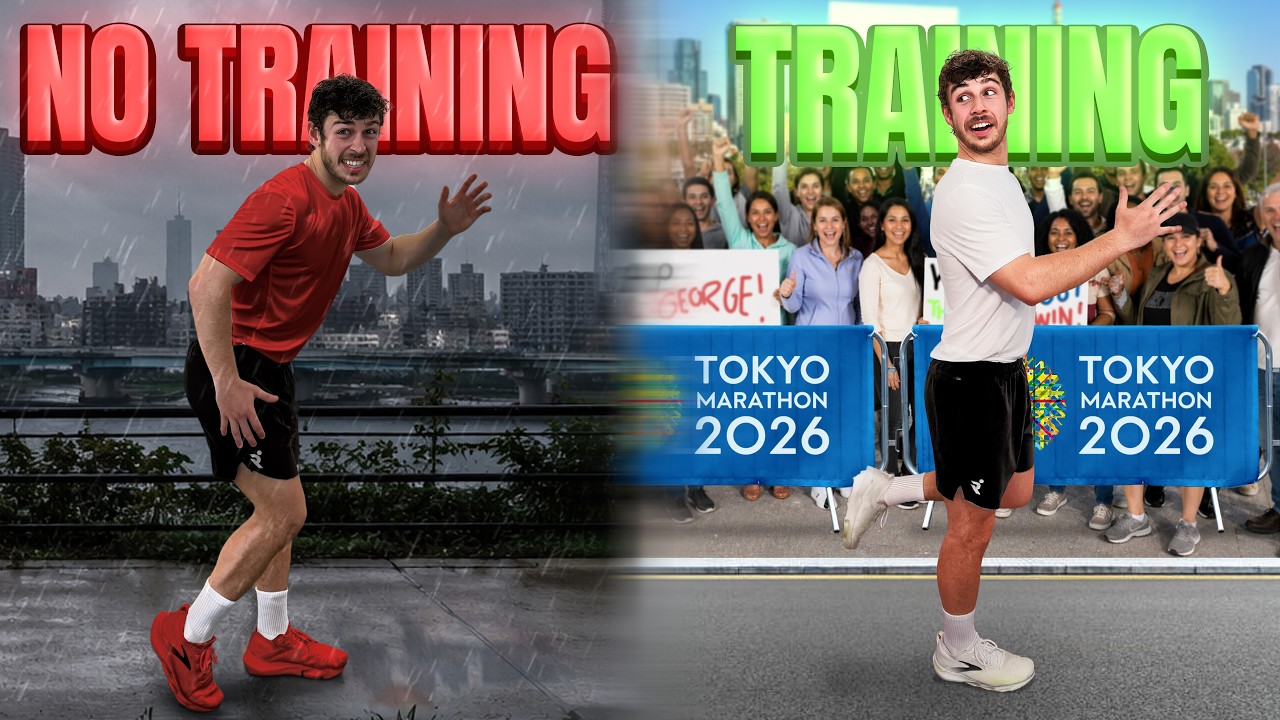
Build the read around a real target event, the runner’s schedule and one assigned workout, then show how it fits the episode’s training experiment. George Clarkey’s marathon comparison gives a concrete structure for this idea.

YouTube brand partnerships
runna.com ↗Show the training process, not a promised result
Runna integrations are strongest when they show how a plan changes the way a creator approaches running. George Clarkey uses a marathon experiment to contrast structure with an untrained run, Russ Cook describes choosing race details and fitting sessions to a schedule, and Yes Theory makes the final training miles a community event. The shared creative thread is the process, not a promised finish time.
 ▶ Jump to the sponsor read
George Clarkey × Runna
The Quantified Scientist is the most frequent partner in the creator list below, with 27 sponsored videos. Makari Espe follows with 7.
Explore the creators behind the sponsorships.
 The Quantified Scientist27 sponsored videos
 Makari Espe7 sponsored videos
 The Running Channel6 sponsored videos
 Russ Cook2 sponsored videos
 Yes Theory2 sponsored videos
 The Iron Snail2 sponsored videos
 Tomiwa TP2 sponsored videosGeorge Clarkey1 sponsored video
Creative starting points drawn from Runna’s integrations.
Build the read around a real target event, the runner’s schedule and one assigned workout, then show how it fits the episode’s training experiment. George Clarkey’s marathon comparison gives a concrete structure for this idea.
Build a story around people preparing for the same event and meeting for a final group run. Yes Theory’s New York shakeout example shows how the app can connect individual preparation to a shared creator-community moment.
The brands, creative choices and product connections worth paying attention to.
George Clarkey’s video sets up a clear contrast between running trained and untrained. The read comes as he looks for direction after a race, then explains selecting a target event and receiving scheduled sessions. Later he describes knowing when to run, how long, and at what intensity. That is a concrete use case: the plan gives the creator structure for an experiment, while the video continues to show the personal experience.
Russ Cook’s marathon-training video is more performance-oriented. He describes moving from unstructured daily running to a plan, then walks through selecting a race, ability level, recent time and preferred training days. This is a procedural explanation rather than a dramatic reveal.
Yes Theory turns Runna from an individual training tool into a shared event. The episode shows a community shakeout run in New York shortly before marathon day, with subscribers who had trained alongside the creator through the app. The narration places the group run within a longer preparation journey, giving the sponsor a visible role in gathering runners rather than only providing software.
That is a distinct pitch lane from a creator explaining settings. For a solo video, show how the plan is selected and where a session fits in the week. For a community or race story, show how people train toward the same event and meet for a final run.
Use Clarkey for a before-and-after training structure, Russ Cook for an app walkthrough linked to a race goal, and Yes Theory for community-led storytelling. Each segment makes a different part of the experience visible: scheduling, plan setup, or shared participation. A good brief should identify the intended viewer action and use the creator’s own experience without turning one result into a universal promise.
Watch how the product becomes part of the video.
Sponsor at 9:49George Clarkey26 May 2026After comparing trained and untrained running, Clarkey describes selecting a marathon target and using scheduled sessions to guide when and how hard he runs. It makes the plan part of the episode’s experiment rather than an unrelated app plug.
 Sponsor at 10:28Russ Cook24 May 2026
Cook explains choosing a race, ability level, recent time and training days before describing a plan tailored to that setup. The sequence is a practical walkthrough; his reported progress remains his personal experience, not a promised outcome.
 Sponsor at 7:29Yes Theory28 Dec 2025
A community shakeout run in New York brings together subscribers who had trained alongside the creator, then follows their final miles before race day. This shows a group participation angle beyond the app’s individual plan setup.
Research the partnerships, compare the creative, and build your shortlist in Sponsorbook.