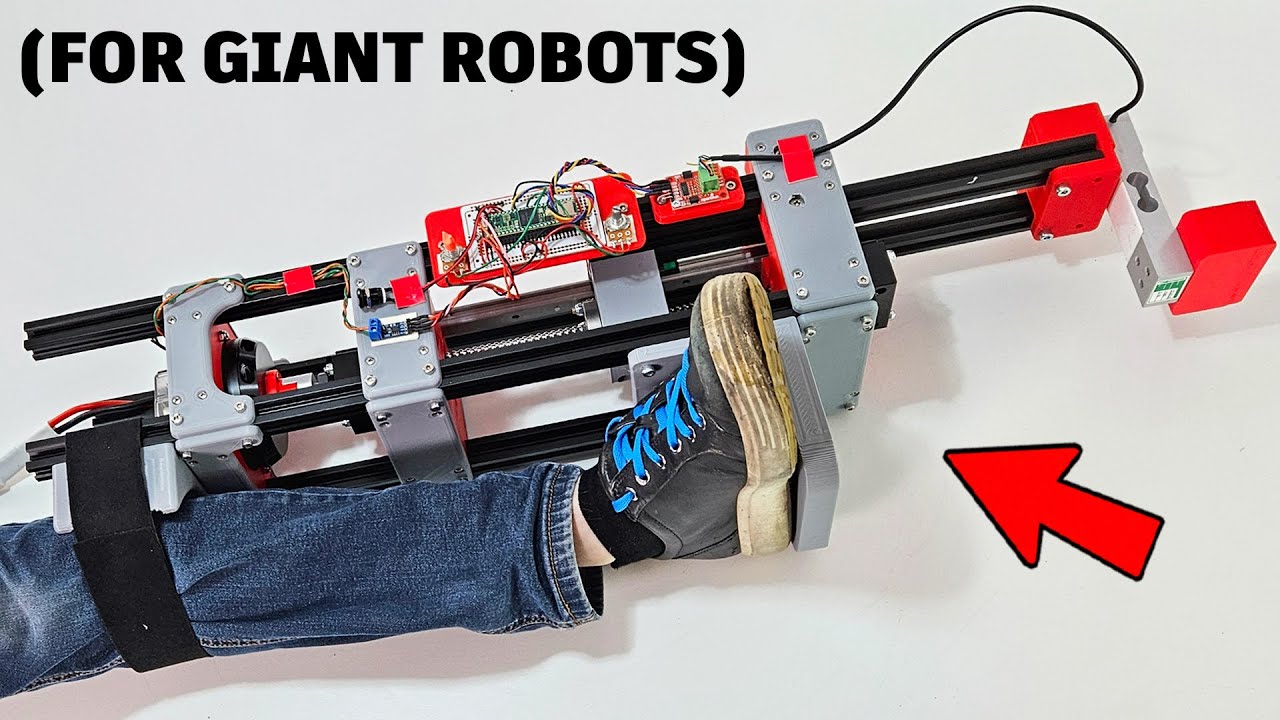
Name the part and its job
The Simply Bearings segment in the one-ball balancing bike is tightly connected to the build: Bruton counts the many small wheels and bearings, then identifies the different bearing sizes used in axles. The sponsor’s contribution is tangible because viewers can see the mechanical system that depends on those parts.
PCBWay follows the same principle in the coded spring project. The host shows previously made metal plates and explains manufacturing services from PCB assembly to CNC machining, sheet metal and 3D printing. The read fits because the episode already concerns measured forces and custom mechanical parts.
Use a build-stage transition, not a generic ad break
Bruton often places a sponsor mention while a component is being assembled or tested. This lets the audience understand why a bearing, printed part or fabrication service matters at that stage. LulzBot is acknowledged during quadruped gearbox development and a one-wheel robot build, where printed components are visible in the mechanism.
A pitch for maker tools can identify a precise build stage, part and function. A fabrication supplier can show a finished component; a material supplier can connect to the printed tire or gear. That specificity is a better fit for the channel than a broad claim about engineering creativity.
Give viewers a route to reproduce the project
The PCBWay read also mentions an open project-sharing community and downloadable files, linking the sponsor to viewers who want to build something similar. That is a useful educational angle: explain how a viewer can get from watching the project to sourcing or adapting its components.
These integrations work because they keep the engineering process visible. For a brief, show the part in the assembly, identify the capability that made it possible and provide a straightforward route to learn more or obtain the component.



 Sponsor at 2:32
 Simply Bearings24 Feb 2026