Let the teardown create the transition
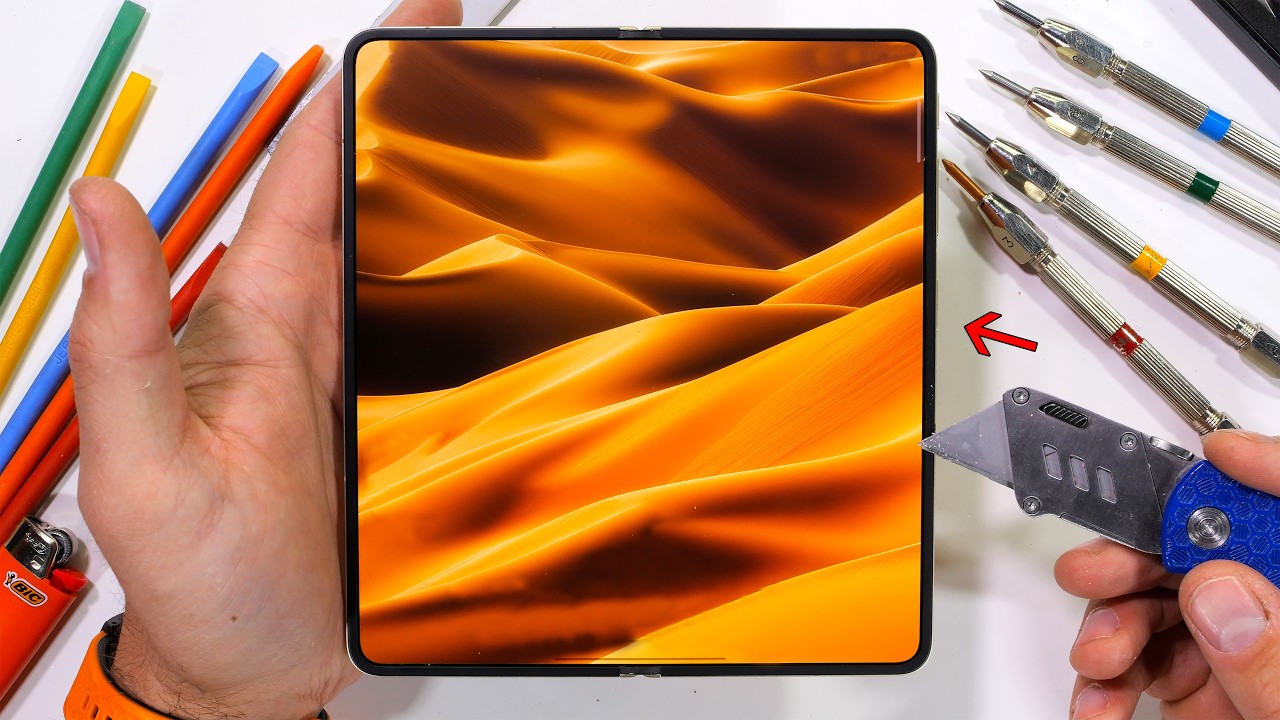
During a phone teardown, the host pauses to introduce KiwiCo and recalls enjoying taking things apart as a child. The monthly Eureka crate is presented as a way to give kids discovery and building experiences, with the host noting that adults can enjoy it too. The sponsor fits the creator’s recognizable curiosity without interrupting the hands-on theme.
The Ridge wallet segment is even more directly embedded: after misplacing a screwdriver, Jerry remembers the spare included in a new wallet box and uses it to continue the repair. The product has an immediate role in the video before the read adds details about wallet designs and the anniversary sale.
Use the product’s physical details as the story
The dbrand Touch Grass skin read follows a joke about wanting to go outside. Jerry explains that the skin uses fine polyethylene strands and electrostatic flocking to mimic grass, making the unusual texture itself the pitch. This is a distinctive product explanation for a channel whose audience is watching close-up hardware details.
These examples suggest a useful creative brief: identify a real object, action or joke from the video that can lead into the product; give the host a few verifiable features to explain; then make the offer or next step clear. The integration can be funny, practical or educational while staying grounded in the teardown.
Keep the demonstration credible
The strongest transitions are specific: a missing tool, an interest in building, or a phone skin that invites touch. Each supplies a reason for the sponsor to appear at that moment. A product that cannot connect to a visible need or a creator interest may feel less natural in this format.
For a pitch, prioritize a demonstrable feature and let the host explain it in his own straightforward style. The return to the repair or device review then feels like a continuation rather than a hard reset.





 Sponsor at 3:29
 KiwiCo25 Apr 2026

