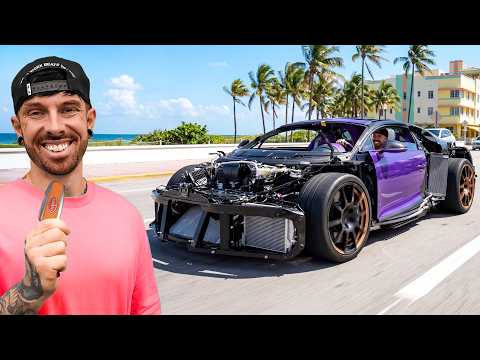
Put the report beside the car being rebuilt
In the GT3 RS video, Mat enters the registration into CarVertical and checks the mileage graph, which shows very little use across a period that raises questions. He then notes the owner count and timeline. Because the audience is already following a suspicious or unusual car purchase, the report appears as part of the project’s fact-finding.
The Veyron episode uses the service to revisit a mileage history that nearly stops after 2023, plus ownership and number-plate changes. Later, the host explains that the check did not flag accident photos for this car. This gives the read a concrete detail to assess rather than a generic “check before buying” message.
Explain what a history check contributes
In the Bugatti service-costs episode, Mat describes using the VIN to review finance, theft and damage history, mileage and the car’s import and ownership timeline. Other rebuilds make the accident record itself central: the wrecked Chiron’s check shows prior crash damage and may include auction photos. The repeated format teaches viewers what kind of history can be relevant to a restoration.
A sponsor creative can follow that pattern: use the exact registration or VIN from the build, show one finding, and explain how it changes the team’s understanding of the vehicle. The value is the link between the report and the real car on screen.
Keep the tool part of the story arc
The host returns to CarVertical across multiple projects, giving the service a recurring role in buying, repairing and assessing cars. At the same time, individual reads are anchored to each car’s known history rather than repeating an identical list.
A strong pitch for this channel should name the specific vehicle stage where a check belongs, such as evaluating a purchase or reviewing a salvage history, and show one relevant field. That approach lets the sponsor add information to the rebuild narrative.




 Sponsor at 45:33
 CarVertical5 Jul 2026